
Ardmore City Meetings and Public Records: A Practical Guide
Follow Ardmore agendas, meetings, alerts, minutes, records, and service requests without sending your question to the wrong city channel.
Ardmore city meetings and public records are easier to follow once you separate four tasks. An agenda tells you what a public body plans to discuss. Minutes record approved meeting actions. A records request asks for an existing city record. The Request Tracker reports a service concern.
Those tools sit in different parts of the City of Ardmore website. This guide connects them so residents, property owners, business readers, journalists, and civic groups can start in the right place.
Choose the city channel by the job
- Use the Agenda Center to preview or review a public body's meeting materials.
- Use Notify Me to subscribe to selected agenda and city lists.
- Contact the City Clerk for a city open-records request.
- Use Request Tracker for a park, lake, right-of-way, or similar service concern.
- Contact the responsible department when you need an operational answer rather than a record.
A service complaint is not automatically a records request. A question for staff is not automatically public comment. Writing down the result you need helps the city route the request and helps you keep a useful record of your own.
For other ways to participate outside city government, TownSpark's Ardmore volunteer guide compares current community pathways. The Community & Civic Life hub gathers more local resources.
Check the City Commission page before attending
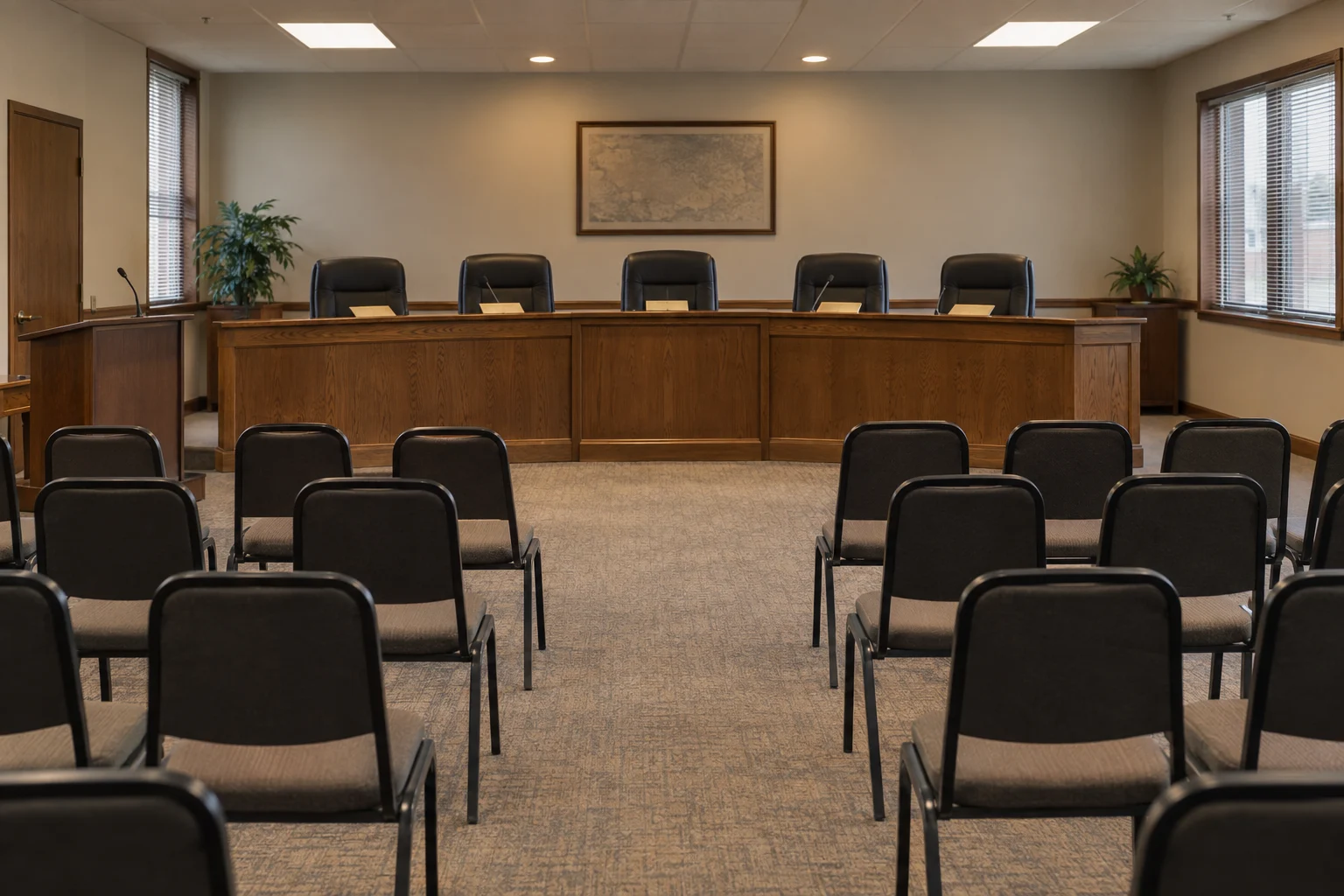
The city's current City Commission page lists regular meetings at 6 p.m. on the first and third Mondays, except holidays. The stated location is the third-floor City Commission Chambers at 23 S. Washington Street.
The same page says the public is welcome to attend. It also says meetings can be viewed live on Cable One Channel 56. A usual schedule is only a starting point, so confirm the actual meeting in the current agenda before traveling.
Holiday shifts, special meetings, cancellations, and amended materials can change the plan. The Agenda Center date should win over a memorized first-or-third-Monday rule.
Read the agenda before you make the trip
The city's Agenda Center covers more than the City Commission. Current categories include the Ardmore Development Authority, Main Street Authority, Public Works Authority, Planning Commission, Regional Park Authority, tourism, parks, historic preservation, animal care, and other boards.
Search by date range, phrase, or category when available. Open the agenda and packet, then note the meeting date, body, and item number. That makes it easier to follow the discussion and locate approved minutes later.
An agenda describes scheduled business; it does not prove the final action. Minutes are posted after approval, according to the City Commission page. If the decision matters, return to the same category and check the approved record rather than relying on the proposal alone.
A packet may contain staff reports, contracts, maps, or attachments that give an item context. Save the permanent city link instead of circulating only a screenshot. If a page offers previous versions, check whether the item you read was amended.
Subscribe to the lists you actually follow
The city's Notify Me page offers email and text subscriptions. Its Agenda Center lists include City Commission, Planning Commission, Ardmore Development Authority, Main Street Authority, Tourism Authority, library, parks, and other public bodies.
Select only the lists tied to your work, neighborhood, property, or interests. A shorter alert list is easier to maintain than subscribing to everything and ignoring most messages.
Notifications help discovery, but they are not a substitute for checking the official agenda when timing matters. Return to the Agenda Center before a meeting, especially when an item may have been amended or a holiday changed the date.
Send city open-records requests to the City Clerk
The official City Clerk page identifies the clerk as the city's records keeper and says the office handles all open-records requests. It lists the first floor of 23 S. Washington Street, 580-226-2100, and weekday office hours of 8 a.m. to 5 p.m.
Ask for an identifiable existing record when possible. Include a date range, department, subject, property or project name, and likely document type. A focused request is easier to understand than “send everything about this issue.”
Keep the request, submission date, and any response together. If you need a record by a deadline, say so and leave time for the office to locate and review it. Do not assume every record can be produced immediately or that every part of a record is public.
This guide does not interpret Oklahoma records law or predict disclosure. For the city's current process, start with the clerk. A request involving police reports uses a separate Police Department records route, so confirm the correct custodian before submitting.
Use Request Tracker for a city service concern
The city's Request Tracker says it is for reporting concerns. Its current Parks and Recreation forms include issues at a city lake, community center, golf course, water park, cemetery, city park, sports league, and city right of way.
Use the form that best matches the location or service. Add a clear description, a precise location, the date you observed the issue, and a way to follow up. Avoid including private information that the city does not need to locate the problem.
A Request Tracker submission asks for attention to a condition. It does not ask the clerk to search city files, and it does not put a topic on a public body's agenda. If you need both service and documentation, treat them as two separate tasks.

Follow boards that match the decision
The city's boards, committees, and commissions index connects public bodies to their latest agendas and archives. Start with the body that owns the decision rather than assuming every local issue begins with the City Commission.
A development question may appear with the Planning Commission or Ardmore Development Authority. A park issue may surface with Parks and Recreation or the Regional Park Authority. Downtown matters may appear with Main Street or historic preservation.
For context on the local economy, TownSpark's major employers data brief and Carter County agriculture brief connect some public decisions to current industry evidence. They do not replace the city's meeting record.
Keep a simple civic paper trail
- Save the official URL, meeting body, date, and item number.
- Download or bookmark the packet version you actually read.
- Return for approved minutes when the final action matters.
- Keep records requests and service reports in separate folders.
- Record submission dates, confirmation numbers, and staff replies.
This habit is useful even for a one-time neighborhood question. It reduces repeated calls and makes any follow-up more specific.
Scope and source date
This explainer uses City of Ardmore pages checked September 7, 2026. It explains navigation and recordkeeping, not public-comment rules, election law, legal rights, meeting outcomes, or whether a particular record must be disclosed.
No organization paid for coverage. Chamber membership did not determine inclusion, and no member recommendation cards were added.