Agriculture Around Ardmore: A 2022 Carter County Data Brief
Read the latest full USDA county profile, then see how Ardmore connects ranch research, food redistribution and future industry recruitment.
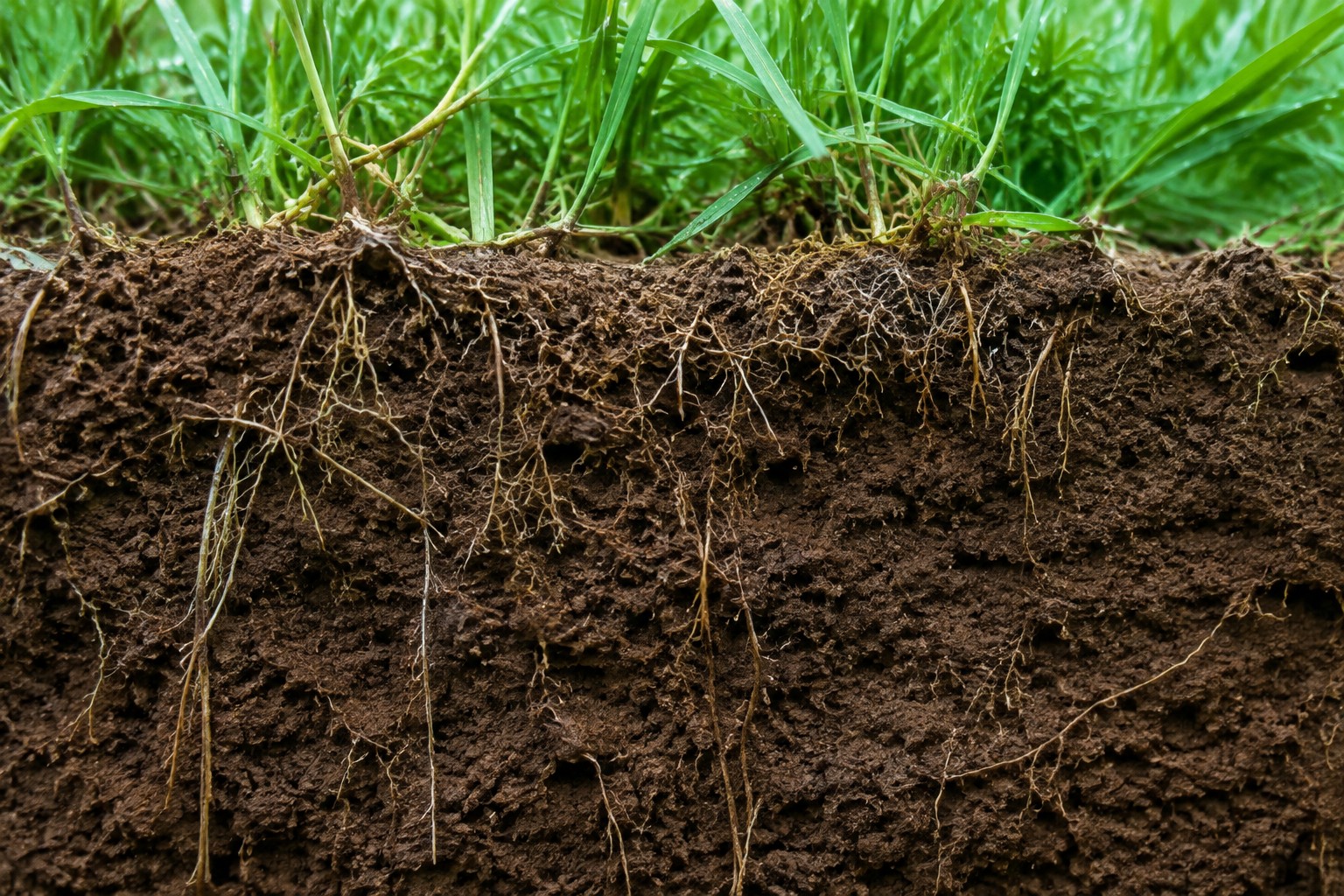
Agriculture around Ardmore is easiest to understand in layers. Farms and ranches sit across Carter County. Ardmore adds research, education, food redistribution, infrastructure, and economic-development work.
The latest full local benchmark is the USDA's 2022 Census of Agriculture profile for Carter County. It is a county snapshot, not an Ardmore city census and not a list of every agriculture-related organization.
Read the numbers at the right scale
USDA counted 1,155 Carter County farms in 2022, covering 384,917 acres. The average farm size was 333 acres. Those figures describe land in farms across the county, including communities and rural areas outside Ardmore.
The profile recorded $29.85 million in market value of agricultural products sold. Livestock, poultry, and related products made up 89 percent of those sales. Crops accounted for the other 11 percent.
That split gives the county a clear livestock-and-grazing shape, but it is not a forecast. USDA also reported fewer farms, fewer farm acres, and lower product sales than in the 2017 census. Each percentage compares two dated census years.
The negative 2022 net cash farm income is another dated aggregate. It does not mean every operation lost money, and it should not be used to judge a specific ranch. Costs, sales, government payments, and farm-related income vary widely.
Pasture, cattle and forage form the base
USDA classified 266,539 acres as pastureland and 64,339 as cropland. Its December 31 inventory counted 48,744 cattle and calves. The profile also listed 30,602 acres of forage, including hay and haylage.
Cattle and calves produced $25.254 million in 2022 sales, far more than any other displayed Carter County category. Fruits, tree nuts, and berries ranked higher within Oklahoma than the county's overall agricultural sales, though some crop details are withheld.
USDA uses “D” when publishing a number could disclose information about an individual operation. Treat those cells as intentionally unavailable. Do not turn a suppressed value into zero or estimate it from a neighboring table.
The profile also says 97 percent of farms were family farms and lists 1,932 producers. USDA can collect data for up to four producers per farm, so producer count and farm count measure different things.
Ardmore connects the farm base to applied research
Noble Research Institute is based on Sam Noble Parkway in Ardmore. Its current public mission centers on grazing lands, soil health, ranch profitability, and farmer and rancher education.
Noble says its work promotes land stewardship by building soil health and supporting grazing-animal production and farm and ranch financial security. Its current site also offers research, articles, in-person and online courses, consultation, and management resources.
That work is not the Carter County farm census. The USDA profile describes the county's production base. Noble shows how one Ardmore institution connects ranch questions to research, education, and practical tools.
Food distribution is documented; manufacturing is a target
Dot Foods has a current Ardmore distribution-center listing at 3411 Cypert Way. Distribution is not the same as farming or food manufacturing. It moves products through the supply chain.
A November 2023 Dot announcement described a planned 33,157-square-foot frozen-warehouse expansion and 35 jobs over three years. Use that as a dated expansion plan, not proof that every construction or hiring milestone is complete.
The Ardmore Development Authority's current target-industry page names agribusiness and food manufacturing. It highlights supplier access to the large Oklahoma City and Dallas–Fort Worth markets.
A target industry is an economic-development priority, not a claim that Ardmore already has every part of that sector. The current evidence clearly supports ranch research, a county production base, and food redistribution. It does not support calling Ardmore a complete food-manufacturing cluster.
Infrastructure links agriculture to wider markets
ADA also connects local distribution to interstate, rail, and air access. TownSpark's Ardmore Industrial Airpark overview separates current transportation assets from planned projects.
The newer Ardmore Transload Terminal guide explains how shippers can move freight between railcars and trucks. Watco lists agriculture among potential commodities at the larger industrial park, but acceptance still depends on the product and handling requirements.
Food-grade products, live animals, bulk feed, hay, refrigerated goods, liquids, and packaged foods need different equipment and controls. A highway or rail connection alone does not answer temperature, sanitation, contamination, storage, permitting, or scheduling questions.
The major employers data brief adds workforce context for Dot Foods and Noble. It uses a dated ADA table rather than presenting a complete employer census.
Match the resource to the question
A producer studying local conditions should begin with the USDA county profile and then move to commodity-specific data. A rancher comparing management approaches can use Noble's research and course pages.
A supplier evaluating Ardmore should separate customer access from facility requirements. Ask about the needed building, utilities, cold storage, labor, trucking, rail, wastewater, food-safety systems, and site controls.
A job seeker should use current employer career pages instead of assuming a dated expansion announcement still reflects open roles. TownSpark's career resources guide shows where to compare training and public employment support.
An economic-development reader should distinguish three statements: what the 2022 county data measured, what Ardmore organizations operate now, and which industries ADA wants to recruit. Combining them without dates creates a larger claim than the evidence supports.
Scope and source date
The agricultural figures come from the USDA 2022 Census of Agriculture, the latest full five-year county profile available on September 6, 2026. Noble, Dot Foods, and ADA pages were checked on that date for current organizational and site context.
This is not a real-time crop report, farm directory, land appraisal, environmental review, or complete inventory of producers and processors. No company paid for coverage. Chamber membership did not determine inclusion or order, and no member recommendation cards were added.
Explore more workforce, employer, infrastructure, and sector reporting in TownSpark's Business, Jobs & Industry hub.