
Ardmore Transload Terminal: A Freight Planning Guide
Understand what Watco lists at Ardmore's new terminal, how the rail-and-truck connections fit together, and what to confirm before routing freight.

The Ardmore Transload Terminal gives businesses a place to move freight between railcars and trucks without building a rail spur at every origin or destination. Watco lists the Ardmore site as active in 2026, with full functionality scheduled by the end of the year.
That timing matters. An active terminal can offer real service while some capabilities are still coming online. Before routing a shipment, confirm the commodity, equipment, storage, switching, truck access, and schedule with the operator.
Start with what transloading does
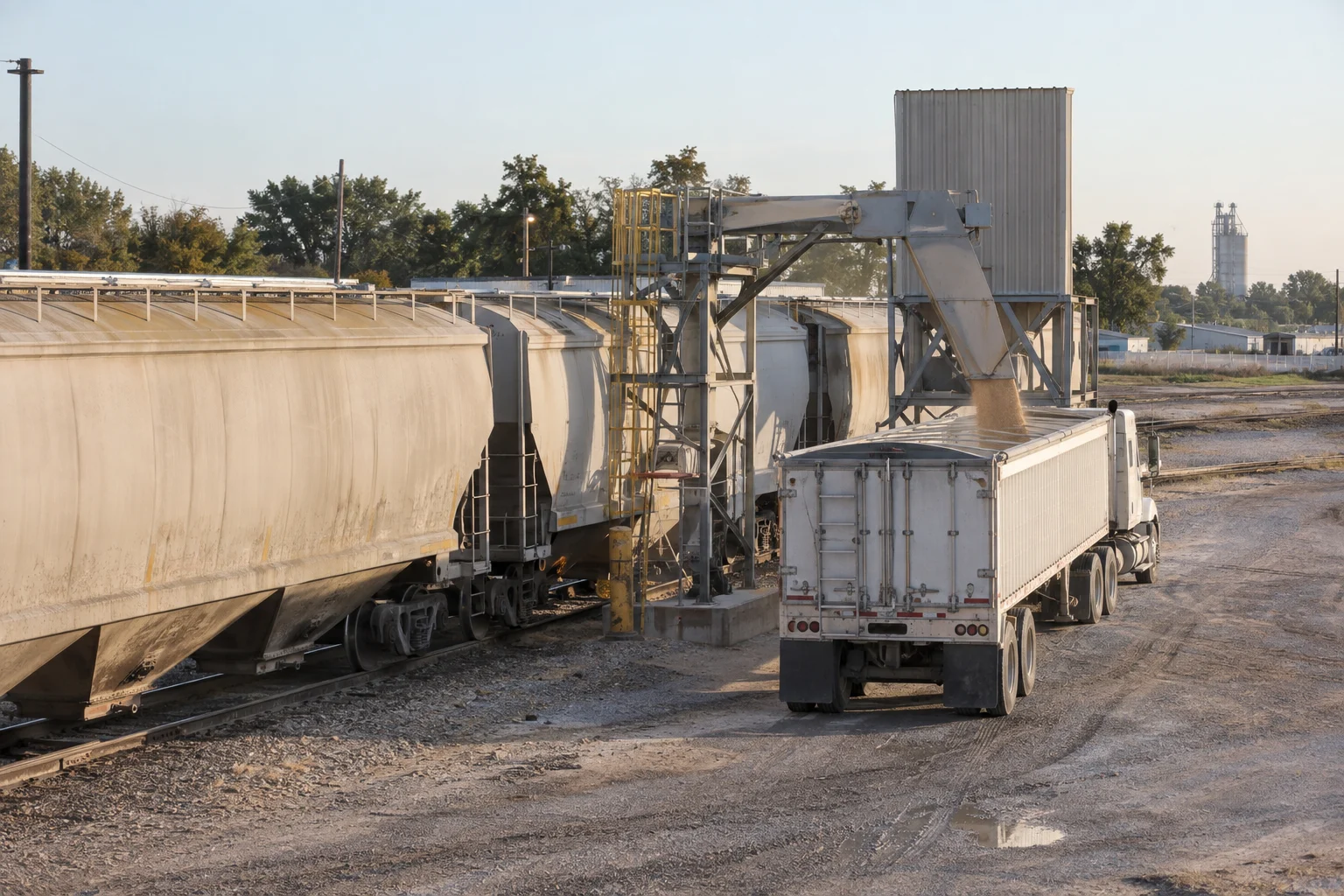
BNSF's current transload guide describes a simple chain. A truck carries freight to a terminal, the load moves onto a railcar, rail handles the long middle leg, and another truck completes delivery.
This setup can serve a business whose plant or customer does not sit directly on rail. It is different from container intermodal service and from a private rail siding. The cargo changes vehicles at a staffed handling site.
For the wider physical setting, TownSpark's Ardmore Industrial Airpark infrastructure overview covers the runways, rail connection, highway access, utilities, and development plans. Keep this terminal guide handy when scoping a freight move.
Read the 2026 status carefully
The official terminal page says operations began in 2026. It calls the site active and says full functionality is scheduled by the end of 2026.
Those statements support a current operating presence, not a promise that every listed service is available for every load today. A shipper should ask which tracks, handling tools, storage areas, and switching arrangements are ready for the requested date.
The timeline also updates an older planning picture. The Ardmore Development Authority's 2025 Economic Vision Plan said the existing loop was not configured to onload a unit train. The current Watco park page now lists unit-train capacity.
Both facts can be accurate for their dates. The practical lesson is to use the operator's current confirmation for a shipment, while keeping the older plan as context for how the site has changed.
Know what Watco lists at the terminal
Watco currently lists truck and railcar loading and unloading, storage, and railcar switching. The terminal page also names six dedicated tracks, five-day-per-week switching, two certified truck scales, railcar storage, and material-handling equipment options.
The site is designed to support bulk conveyors, but “designed to support” is not the same as a conveyor being ready for a particular product. Ask about the exact transfer method, rate, contamination controls, weather protection, and cleanup requirements.
Watco groups potential freight into bulk, breakbulk, and liquid commodities. The operator's Global Transportation & Industrial Park page gives examples that include agriculture, lumber, bulk liquids, aggregates, wind-energy components, solar panels, and steel.
That list shows range, not automatic acceptance. Food-grade material, hazardous products, oversized pieces, fuels, powders, and weather-sensitive goods can require very different equipment, permits, insurance, storage, and handling plans.
Separate the terminal from the larger park
The Ardmore terminal page and the larger park page describe different scopes. The terminal lists six dedicated tracks and its own handling features. The broader park page lists 400 railcar spots, unit-train capacity, and three million square feet of warehouse space.
Do not assume every park-wide number belongs to the terminal pad or is available on demand. Ask which property, operator, building, track, and contract would serve the load.
The ADA's current Airpark property page says the AmeriPointe loop can hold more than 150 fully loaded cars. It also lists more than 800 acres beside the loop for industrial development.
Businesses comparing a shipment with a permanent site should keep those decisions separate. A transload move can test rail in a supply chain. A plant or warehouse location requires its own land, utility, engineering, environmental, and rail-service review.
Map each connection before quoting a route
Watco lists BNSF rail connectivity, road access toward I-35, and adjacency to Ardmore Municipal Airport. The airport connection may matter for some industrial projects, but it does not turn every rail or truck move into an air-cargo service.
The Airpark is east of the interstate rather than on its frontage. ADA's property page lists the nearest highway as nine miles away. Truckers and shippers still need to review the final approach, vehicle size, turning needs, load restrictions, permits, and appointment rules.
BNSF also lists AmeriPointe among its current Certified Sites. BNSF says certification reviews ten economic-development criteria to reduce development risk. It does not replace carrier approval, terminal arrangements, or project-specific due diligence.
For a picture of the companies already using the Airpark, read TownSpark's Ardmore aerospace and MRO explainer. The major employers data brief shows how distribution fits beside manufacturing, energy, research, and regional services.
Bring a shipment profile to the first call
A useful first conversation starts with the load, not the marketing label. Prepare a short shipment profile that answers:
- What is the commodity, and does it have food-grade, hazardous, dusty, liquid, temperature, or contamination concerns?
- How much moves per shipment, per month, and during the busiest season?
- What are the origin, destination, preferred railcar, and truck equipment?
- Which loading, unloading, lifting, pumping, conveyor, or secure-storage capability is required?
- How long can the freight or railcar wait, and what storage or demurrage exposure could apply?
- Which switching days, appointments, inspections, permits, and insurance documents are needed?
Watco publishes terminal and sales contacts on the Ardmore page. Use those current contacts to confirm service and pricing. Do not treat a general website description as a quote, reservation, or operating agreement.
Treat the site as an industrial workplace
Watco currently posts weekday hours of 7 a.m. to 4 p.m. and requires gloves, a hard hat, safety boots, safety glasses, and a high-visibility vest. The page also links to yard rules.
Those details are for planned business access, not casual sightseeing. Confirm authorization, arrival time, driver instructions, personal protective equipment, and site rules before sending a person or vehicle to 815 Waterplant Road.
Scope and source date
This operating snapshot uses Watco, BNSF, and Ardmore Development Authority information checked September 5, 2026. It explains documented services and site relationships. It is not a freight quote, engineering review, safety instruction, carrier commitment, or complete inventory of Ardmore logistics providers.
No company paid for coverage. Chamber membership did not determine inclusion or order, and no member recommendation cards were added. Explore more infrastructure, workforce, employer, and industry reporting in the Business, Jobs & Industry hub.